
Clean water and safe sanitation are fundamental human rights, yet achieving Sustainable Development Goal 6 (SDG 6) ensuring availability and sustainable management of water and sanitation for all requires more than building pipes and toilets. Across Pacific Island landscapes, human health is deeply intertwined with the health of surrounding ecosystems. Heavy rainfall, land-use changes, and compromised sanitation infrastructure can rapidly wash pathogens from upstream land into rivers, drinking water sources, and coastal reefs.
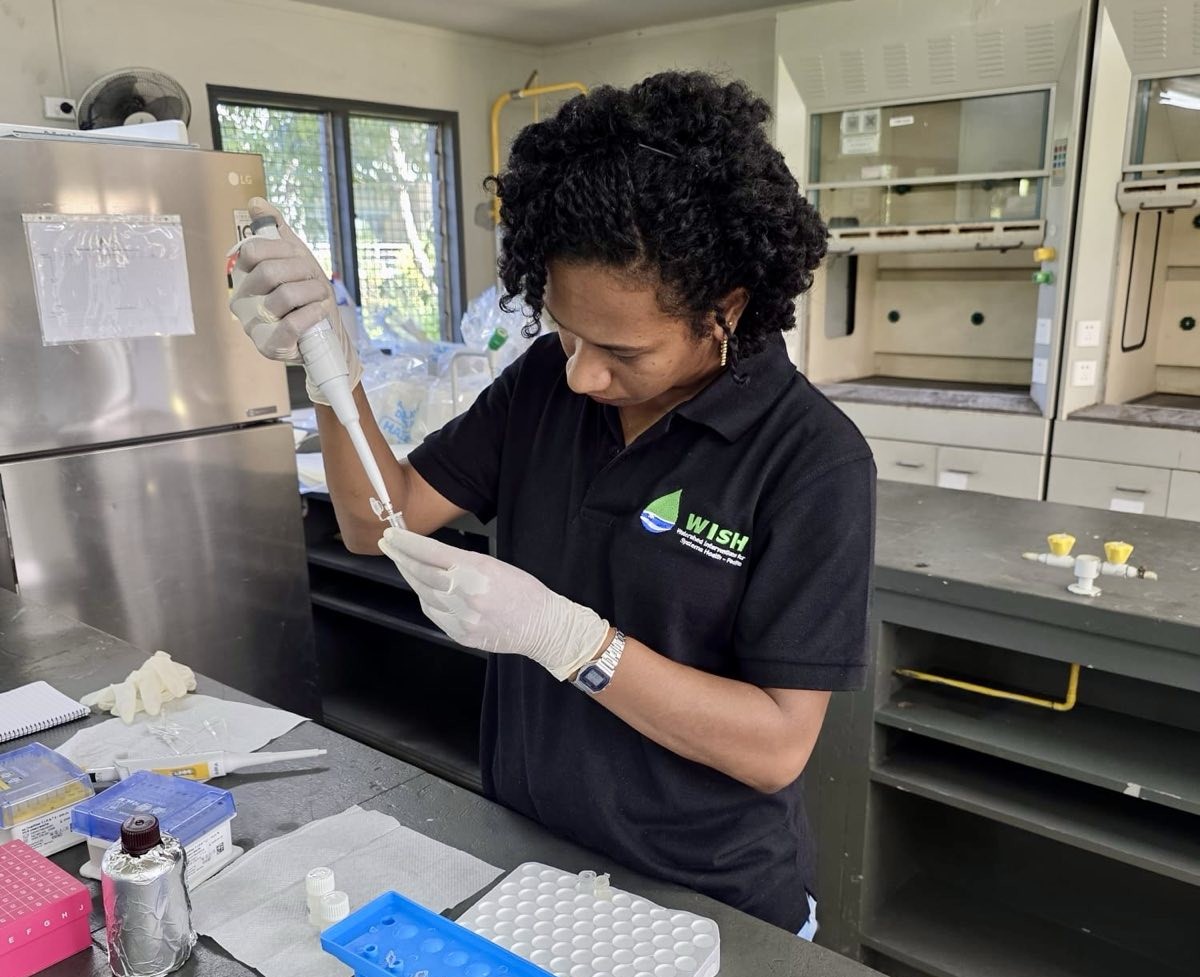
Through the Watershed Interventions for Systems Health (WISH) project, researchers and communities are tackling water-related diseases such as leptospirosis, typhoid, and diarrheal illnesses at their environmental roots. A cornerstone of this “systems health” approach is pairing traditional E. coli culturing with advanced DNA extractions across water, soil, and human swab samples. Together, these two tools transform how water and sanitation interventions are designed, targeted, and evaluated.
To safeguard water quality under SDG 6.1 (safe and affordable drinking water) and SDG 6.3 (improving water quality by reducing pollution), public health teams need to answer two critical questions: Is the water safe right now? and Where is the contamination coming from?
- E. coli Cultures (Measuring Active Risk): Culturing Escherichia coli remains the global gold standard for verifying drinking water safety. Because E. coli cultures only grow living, metabolically active bacteria, they provide immediate, actionable evidence of recent fecal contamination. For WISH communities, high E. coli counts signal an urgent need for water treatment, infrastructure repair, or sanitation upgrades.
- DNA Extractions (Uncovering the Full Picture): While culturing shows what is alive and easy to grow in a lab, DNA extraction captures the entire genetic footprint of a sample including slow-growing, unculturable, or low-abundance pathogens (like Leptospira or Salmonella Typhi), as well as antimicrobial resistance (AMR) genes. Crucially, microbial source tracking via DNA can distinguish whether fecal pollution originates from human septic systems, livestock, or wildlife.
In a watershed, pathogens do not stay neatly confined to water pipes, they move dynamically between land, water, and people. Sampling across three distinct matrices allows the WISH project to map these transmission pathways from ridge to reef:
1. Water Samples: Protecting Drinking Supplies and Waterways
Testing surface water, community reservoirs, and household taps directly measures progress toward safely managed drinking water. E. coli cultures establish baseline water quality and verify whether interventions such as protected spring boxes or filtration systems successfully reduce live bacterial loads. Meanwhile, DNA extraction tracks broader seasonal shifts in the watershed microbiome and detects elusive waterborne pathogens before outbreaks occur.
2. Soil Samples: Stopping Land-to-Water Runoff
Soil acts as both a filter and a reservoir for pathogens. When heavy rains hit poorly managed agricultural land, livestock pens, or leaking latrines, contaminated soil washes directly into rivers and streams. Culturing E. coli from soil reveals how long fecal bacteria survive in terrestrial environments under tropical conditions, while DNA analysis uncovers persistent pathogen reservoirs and shows how land-use interventions like riparian buffer zones and reforestation help stabilize soil and trap pollutants before they reach waterways.
3. Human Swab Samples: Closing the Epidemiological Loop
Ultimately, SDG 6 is about protecting human health and well-being. Analyzing human swab samples connects environmental findings directly to community health outcomes. Culturing confirms active colonization or infection by diarrheagenic E. coli pathotypes, while high-resolution DNA typing allows researchers to match clinical strains with environmental isolates from local water and soil proving whether a sanitation upgrade successfully broke the chain of transmission.
Evidence-Based Action for Resilient Communities
By integrating molecular DNA science with proven microbiological culturing, the WISH project moves water and sanitation management from reactive crisis response to preventative systems health. Rather than guessing where contamination originates, communities, water committees, and government partners gain precise scientific evidence to target investments where they matter most protecting drinking water, restoring watershed ecosystems, and advancing lasting SDG 6 resilience across the Pacific.