
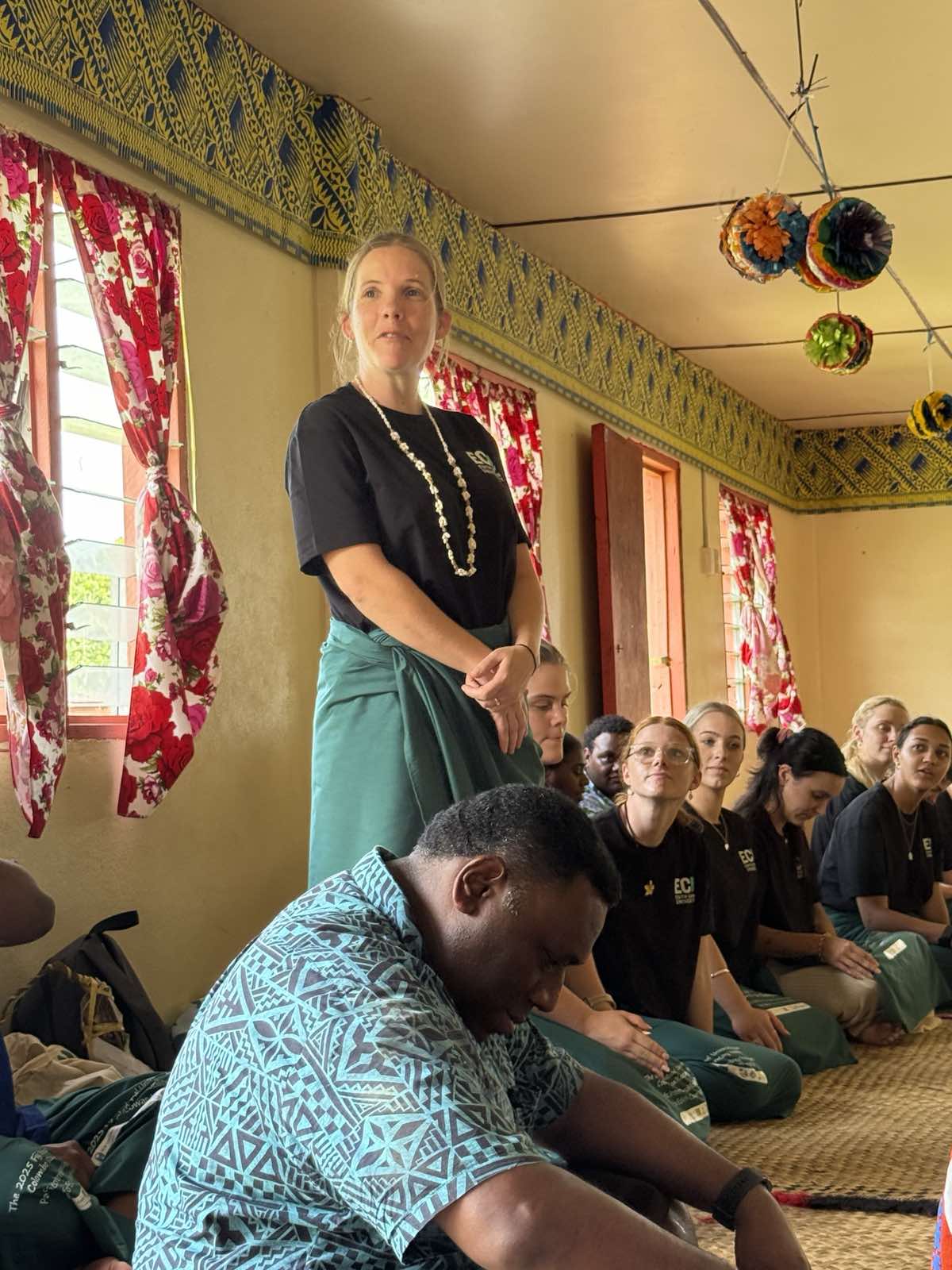
The Pacific Islands, a region defined by the immense power of the ocean and the vibrant resilience of its cultures, is arguably the most critical junction for the modern concept of Planetary Health. Here, the profound, intricate relationship between human well-being and environmental stability is not a theoretical model, but a daily reality. The region is actively shaping the global conversation on sustainability, making it the perfect setting for the New Colombo Plan (NCP) Planetary Health Study Tour, which brought students from Edith Cowan University (ECU) to Fiji National University’s (FNU) College of Medicine, Nursing and Health Sciences (CMNHS).
A Century of Compassionate Leadership
The tour commenced with a rousing welcome from the Acting Dean of CMNHS, who underscored the College’s deep historical commitment to the region. CMNHS boasts a rich and proud history, tracing its origins back to the Suva Medical School, established in 1885. “This year we will be turning 140 years!” the Dean noted, celebrating over a century at the forefront of medical and health education in the Pacific. This legacy forms the bedrock of FNU’s commitment to training generations of healthcare professionals who serve not just Fiji, but the entire region.
Today, CMNHS is a dynamic hub offering a diverse range of study programs – from medicine, dentistry, and nursing, to pharmacy, public and environment health, and various allied health sciences. The core mission remains the same: to produce “competent, compassionate, and culturally sensitive professionals”.
The Dean was clear about the urgency of the moment. The focus on Planetary Health is particularly pertinent because the Pacific is on the frontlines of climate change and environmental degradation, experiencing firsthand the profound impacts on human health. Understanding the intricate connections between human health and the health of our planet is, quite simply, a matter of survival and sustainability for Pacific communities. This partnership, fostered by a vital Memorandum of Understanding (MoU) between CMNHS and ECU, along with crucial support from the WISH-Pacific and RISE projects, is vital to addressing this challenge. The establishment of the new Pacific Planetary Health Research Centre was also acknowledged as a significant beacon of hope and innovation.
The Conservation-Health Nexus
In Fiji, environmental conservation is an active public health strategy. The nation’s unique endemic flora and fauna, such as the beautiful, yet vulnerable, Fijian crested iguana (Brachylophus vitiensis), represent the intricate threads of ecological resilience. The loss of a species is not merely a loss of biodiversity; it is a weakening of the natural systems that purify air, regulate climate, and provide resources essential for human health.
A key and often unseen battle is waged through biosecurity. This relentless vigilance against invasive species – pests, plants, and pathogens – is the first line of defense, safeguarding both the natural heritage and public health from diseases that can threaten both human and animal populations. This scientific rigor is constantly enriched by the integration of indigenous knowledge, which holds centuries of wisdom on traditional resource management and sustainable practices.
Building Resilience from the Grassroots
For the students, the study tour provided a necessary shift from theory to tangible reality. Coastal communities face the undeniable effects of climate change through intensified cyclones and sea-level rise. This has reframed community development around climate resilience. The Planetary Health framework provides the lens: protecting mangrove forests creates natural seawalls; maintaining healthy reefs safeguards fish stocks and coastal protection.
The students’ immersion included a vital visit to Navunikabi Village, a WISH Fiji community, where they learned about traditional lineages and cultural practices, witnessing firsthand how the Namosi Provincial Council and the WISH Fiji team complement each other’s work. This demonstrated that empowering communities to protect their natural buffers is the most effective form of preventative healthcare against the shocks of a changing climate.
Research, Debate, and the Future of Policy
The academic component culminated in sessions designed to forge future leaders. A debate session honed students’ skills in articulation, critical analysis, and practicing empathy, allowing them to engage in evidence-based reasoning on integrating Planetary Health into Pacific Policies. This critical training is essential as Pacific Island Countries and Territories (PICTs) push for greater global climate action.
Furthermore, a dedicated session at the Fiji Institute of Pacific Health Research (FIPHR) emphasized how health inquiry is the bedrock of informed decision-making. Research into areas like non-communicable diseases and the health impacts of climate change transforms data into actionable policy, ensuring that health systems are truly responsive to the unique Pacific context.
Concluding the welcoming address, the Dean encouraged the students to fully immerse themselves, saying: “I know you all come from the most isolated city in the world – Perth. But, trust me, it will be worth it!”. This journey underscores the urgent need for interdisciplinary collaboration and cross-cultural learning, affirming that the path to global health is found by listening to and learning from those who live on the planet’s frontlines.