
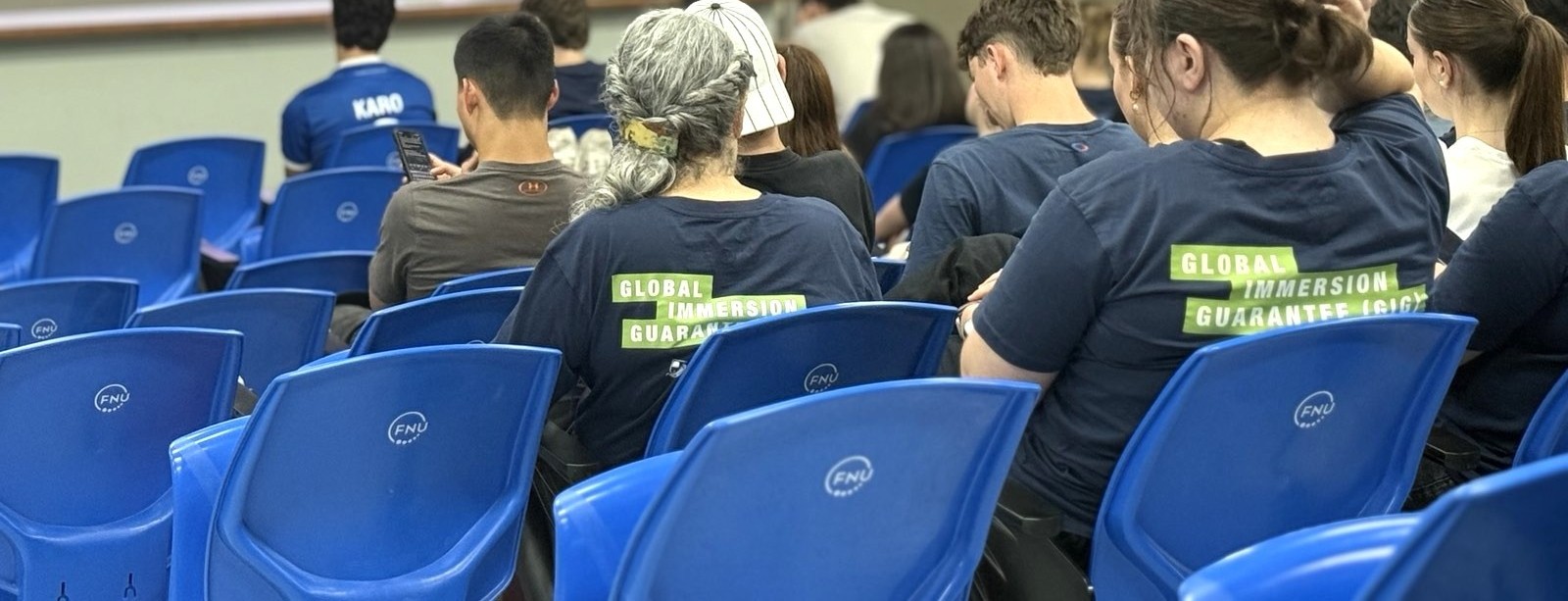
In a powerful exchange of knowledge and community engagement, the Watershed Interventions for Systems Health (WISH) and Revitalizing Informal Settlements in their Environments (RISE) teams
recently hosted nearly 300 students from Monash University. As part of the Global Immersion Guarantee (GIG) program, students arrived in three cohorts – two in December 2025 and a final block on January 13, 2026. The visits offered a “living classroom” experience, moving beyond textbooks to show how human health and environmental integrity are two sides of the same coin.
At the heart of the visit was the concept of Planetary Health. This emerging discipline recognizes that we cannot have healthy people on a sick planet. By focusing on water and sanitation, the GIG
students explored how managing our natural resources directly impacts the prevention of disease and the flourishing of local communities.
Project Spotlight: RISE
The RISE program is a transdisciplinary research initiative trialing a water-sensitive approach to sanitation in informal settlements across Makassar, Indonesia, and Suva, Fiji.
The Goal: Moving away from traditional “big pipe” infrastructure toward nature-based solutions.
The Method: Co-designing green infrastructure, such as constructed wetlands, to treat wastewater naturally.
Success Metrics: Improved health and well-being, particularly for children under five—and increased ecological diversity in the surrounding environment.
Project Spotlight: WISH – Pacific
WISH focuses on the “Ridge to Reef” connection. The health of a watershed (the land that drains into a common waterway) dictates the health of everyone downstream. “Higher incidences of water-related
bacterial diseases like typhoid and leptospirosis occur within watersheds with cleared land and high livestock density.”
By implementing targeted watershed interventions, WISH works to:
Reduce Disease Risk: Minimizing flooding and standing water to curb dengue and bacterial outbreaks.
Protect Ecosystems: Preventing sediment and nutrients from damaging coral reefs and freshwater sources.
Support Livelihoods: Ensuring the cultural and food practices of local people remain sustainable.
After their briefings, students stepped out of the classroom and into the communities. They visited the RISE settlements of Muanivatu, Komave, Matata, and Waila, witnessing firsthand how green infrastructure is being integrated into the fabric of daily life. These visits allowed students to see the reality of “systems health” where a clean waterway isn’t just an environmental win, but a foundation for a healthier, more resilient future for the communities.