
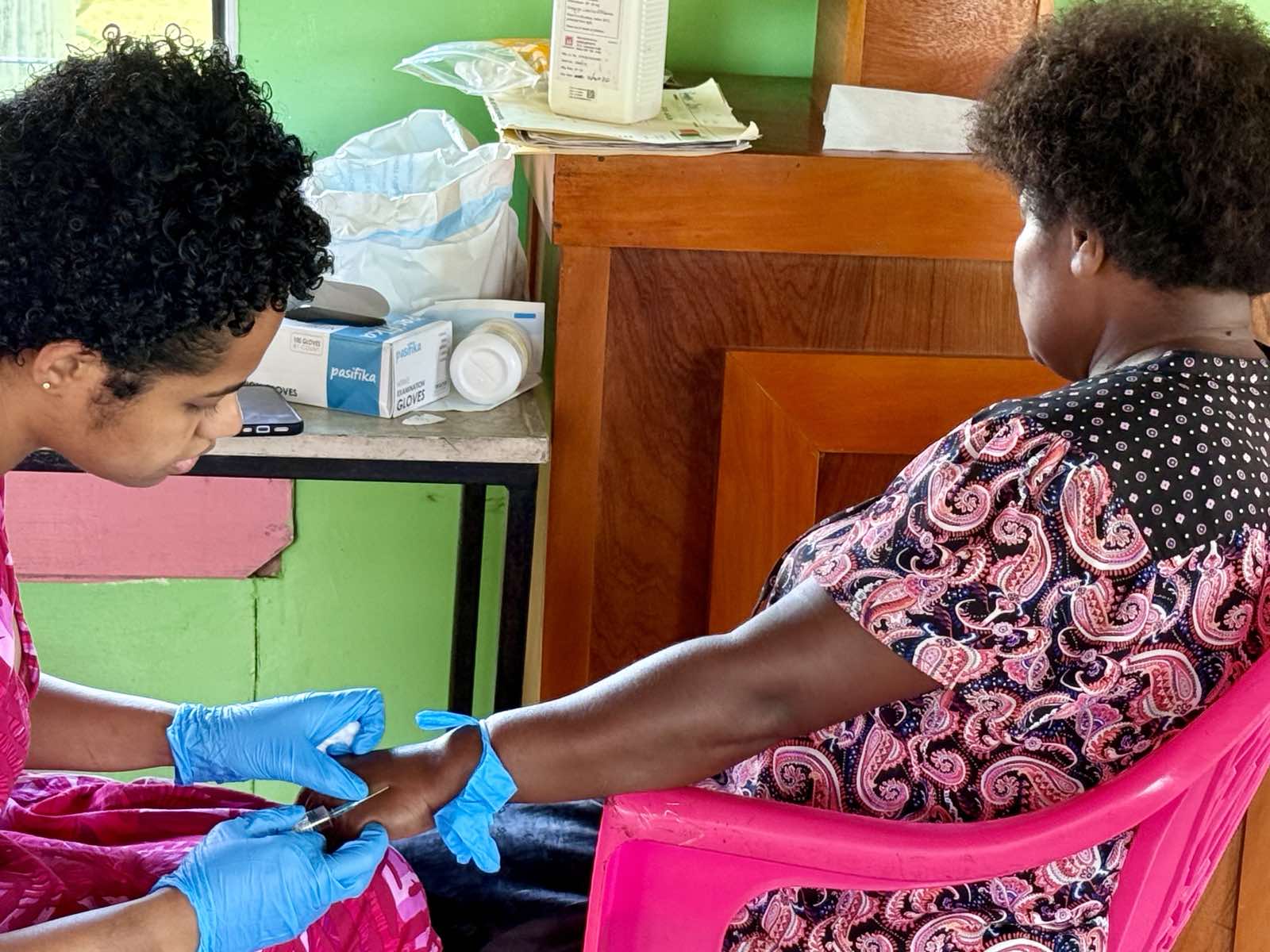
Acute Febrile Illness (AFI) remains a critical focus for infectious disease monitoring, requiring coordinated action across health facilities, laboratories, and local communities. Through the SAFI Study, surveillance activities are advancing across Vunidawa Hospital and Nakorosule Health Centre, pairing clinical case detection with community engagement, health promotion, stakeholder coordination, and research dissemination.
Rather than treating recruitment as a standalone metric, the study follows a structured five-stage surveillance model designed to turn frontline observations into public health action:
- Case detection: Screening patients and applying the AFI case definition
- Enrolment: Gathering clinical and epidemiological data
- Investigation: Collecting specimens, running laboratory tests, and monitoring results
- Analysis: Conducting data quality checks and reviewing disease patterns and trends
- Reporting: Producing weekly updates and evidence to guide public health decisions
Across both participating sites, 86 patients have been screened so far, with 44 meeting the AFI eligibility criteria and 43 enrolled representing a 97.7% recruitment rate among eligible patients. A total of 105 specimens have been collected, with 91 accepted for processing.
Facility-level figures highlight complementary contributions from both sites:
| Indicator | Vunidawa Hospital | Nakorosule Health Centre | Total |
| Screened | 54 | 32 | 86 |
| Eligible | 17 | 27 | 44 |
| Enrolled | 16 | 27 | 43 |
While Vunidawa Hospital accounted for a higher volume of overall screenings (54 compared with 32 at Nakorosule), Nakorosule Health Centre recorded a higher number of eligible and enrolled cases (27 enrolled vs. 16 at Vunidawa).
Among the 43 enrolled participants, specimen collection coverage includes 40 blood samples (93%), 40 blood cultures (93%), and 25 nasal swabs (58%). Of the 105 total specimens collected, 91 were accepted, 3 were rejected, and 11 had no recorded acceptance status.
Preliminary pathogen detections to date include:
- Influenza A: 4 detections
- Dengue: 3 detections
- Leptospirosis: 3 detections
Testing for Respiratory Syncytial Virus (RSV) is planned for a later phase. Importantly, the study notes that these early detections are preliminary and do not represent population-level disease incidence.
Strong surveillance depends on trust and coordination beyond clinic doors. Alongside facility operations, the SAFI Study has progressed across several supporting workstreams:
- Community engagement: Activities to build awareness, understanding, and study participation, including sharing promotional materials
- Health promotion: Health talks led by the Subdivisional Medical Officer (SDMO) to support surveillance and encourage timely health-seeking behaviour
- Stakeholder coordination: Development of a Stakeholder Registry to support mapping, communication, and collaboration
- Research dissemination: Presentation of the study at PIHRS 2026 to boost visibility and knowledge sharing
- Monitoring and reporting: Weekly situation reports tracking recruitment, specimens, laboratory findings, and data quality
Most core workstreams are active or completed with facility surveillance, specimen collection and testing, and weekly reporting ongoing; community engagement undertaken; SDMO health talks conducted; and the PIHRS 2026 presentation completed. Two areas remain next on the roadmap: following up pending laboratory results and rolling out planned RSV testing.
Looking ahead, the study’s next priorities center on sustaining momentum and sharpening quality:
- Surveillance: Maintain steady screening and recruitment
- Laboratory coordination: Boost specimen collection coverage and follow up outstanding test results
- Data quality: Strengthen data completeness, analysis, and reporting
- Community participation: Sustain community engagement and health promotion
- Stakeholder coordination: Maintain close collaboration with study partners
- Knowledge translation: Share findings to support public health decision-making
By connecting frontline screening, laboratory investigation, community outreach, and research sharing, the SAFI Study contributes to earlier disease detection, stronger surveillance capacity, community awareness, and evidence-informed preparedness in Fiji.